
Why Supplier Engagement Is Essential for Carbon Measurement in Lotteries
June 05, 2026
Carbon measurement is no longer just an internal sustainability exercise.
For lotteries seeking to understand and reduce their environmental impact, some of the most important emissions data sits beyond their own organisation. It sits with suppliers, service providers, logistics partners, technology providers, manufacturers and other partners across the value chain.
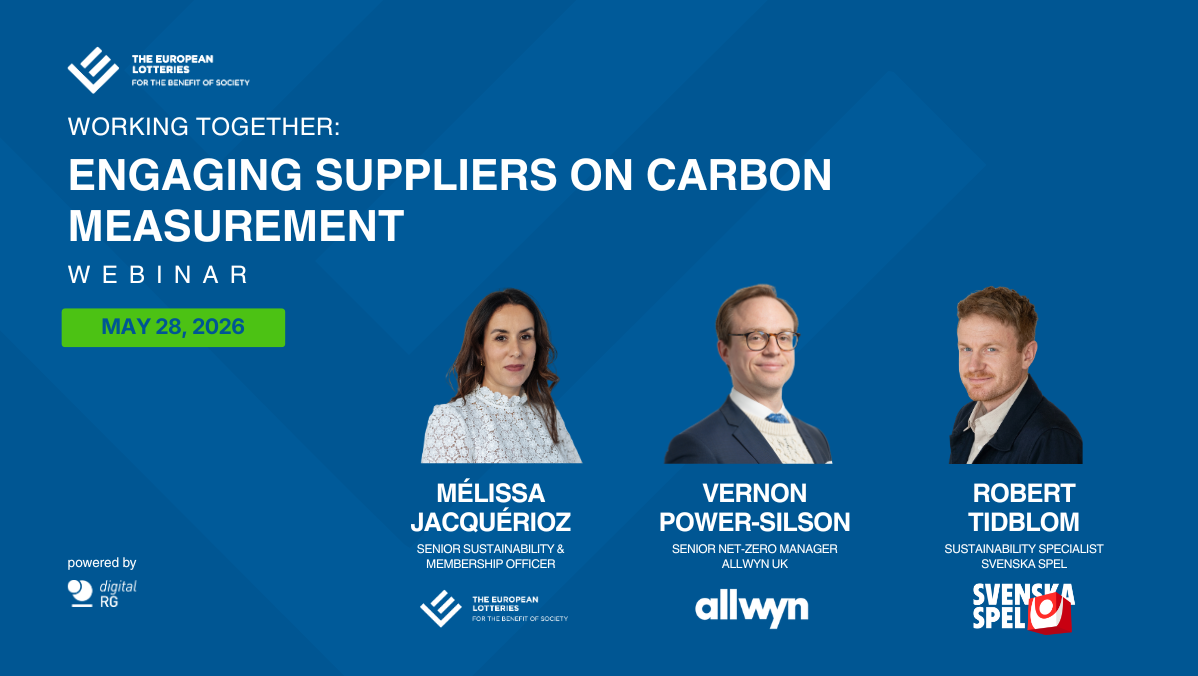
This was the focus of a recent European Lotteries Environmental Initiative webinar, organised in collaboration with digitalRG. The session brought together Mélissa Jacquérioz, Senior Sustainability & Membership Officer at the European Lotteries, Vernon Power-Silson, Senior Net-Zero Manager at Allwyn UK, and Robert Tidblom, Sustainability Specialist at Svenska Spel.
Together, they explored one of the most important questions for lotteries working on environmental sustainability: how can organisations engage suppliers more effectively in carbon measurement and reduction?
The answer was clear. Supplier engagement is not just a reporting requirement. It is a practical route to better data, stronger relationships and more meaningful climate action.
Why Scope 3 emissions make supplier engagement essential
For many lotteries and gaming organisations, most emissions are not found in offices, vehicles or purchased energy. They are found across the wider value chain.
These indirect emissions, known as Scope 3 emissions, can include emissions linked to products, services, transport, technology, materials and other business activities outside an organisation’s direct control.
The figures shared during the webinar made this clear. Allwyn Group’s presentation showed that 96% of its emissions sit in Scope 3. Svenska Spel presented a similar picture, identifying that 98% of its 2025 emissions were in Scope 3.
This means that lotteries cannot fully understand their carbon footprint without working closely with suppliers.
Without supplier data, organisations may need to rely on broad estimates. With better supplier engagement, they can build a clearer picture of where emissions come from, improve the accuracy of carbon accounting and identify where reduction efforts can have the greatest impact.
Start with the suppliers that matter most
One of the most practical messages from the webinar was that lotteries do not need to engage every supplier at once.
Allwyn UK shared how it approached supplier engagement by focusing first on the suppliers responsible for 80% of its spend. This reduced the initial group to 25 suppliers, making the process more manageable and allowing the team to focus on the areas most likely to improve Scope 3 emissions data.
This approach offers an important lesson for lotteries at any stage of their carbon measurement journey: prioritisation matters.
Starting with high-spend, high-impact or strategically important suppliers can help organisations avoid becoming overwhelmed. It also makes it easier to test the process, identify common challenges and build a stronger foundation for future engagement.
Make the process clear, practical and supportive
Supplier engagement is only effective when suppliers understand what is being asked of them.
Allwyn UK’s approach included direct communication, a standardised emissions data template, a supplier webinar and a trial run. These steps helped explain what information was needed, why it mattered and where suppliers might need support.
This is important because suppliers will not all have the same level of carbon maturity. Some may already measure and report emissions in detail. Others may not yet have the systems, knowledge or capacity to provide activity-based data.
A broad, one-size-fits-all request is unlikely to deliver the best results. Lotteries need to make the process clear, realistic and proportionate, while recognising that some suppliers may need more guidance than others.
Carbon data should lead to better decisions
The webinar also reinforced an important point: carbon measurement should not end with data collection.
Allwyn UK shared a case study with HH Global on the redesign of permanent point-of-sale materials. The project used a sustainable design methodology that included design for disassembly, recyclable materials, lightweighting and CO₂ measurement.
The redesigned materials achieved an 18% reduction in CO₂ impact compared with previous designs. The project also used metal components made from up to 80% recycled materials, allowed materials to be easily separated at end of life and introduced a modular design so individual parts could be replaced instead of the whole sign.
This example shows the real value of supplier engagement. Better data can help lotteries make better decisions, redesign products, work more closely with partners and reduce emissions in practice.
Procurement and sustainability need to work together
Svenska Spel’s presentation highlighted another key lesson: supplier engagement should not sit only with sustainability teams.
Procurement teams often manage supplier relationships, contracts, sourcing processes and follow-up. Sustainability teams may understand the carbon accounting requirements, but procurement teams are often best placed to embed those requirements into day-to-day supplier management.
Svenska Spel’s approach connects sustainability and procurement by identifying and prioritising procurements, assessing risks by category, including sustainability criteria in sourcing and maintaining dialogue with suppliers.
For existing suppliers, the focus includes identifying high-impact categories, building relationships, explaining why the information matters and integrating supplier data into annual greenhouse gas calculations.
This shows how carbon measurement can become part of procurement itself, rather than a separate reporting task.
Key takeaways for lotteries
For lotteries looking to improve supplier engagement on carbon measurement, the webinar offered several practical lessons:
- Start with priority suppliers. Focus first on high-spend, high-impact or strategically important suppliers rather than trying to engage everyone at once.
- Explain the purpose. Suppliers are more likely to respond when they understand why the data is being requested and how it will be used.
- Use clear templates and expectations. Standardised requests can reduce confusion and improve data quality.
- Recognise different levels of maturity. Some suppliers will need more support, guidance or time than others.
- Connect sustainability and procurement. Supplier engagement is more effective when environmental expectations are built into sourcing, contracts and follow-up.
- Use data to drive action. The goal is not only to measure emissions, but to use the information to reduce them.
Do not wait for perfect data
One of the strongest messages from the webinar was also one of the most practical: lotteries do not need perfect data to get started.
Carbon measurement can feel complex, especially when information is incomplete or spread across different departments and suppliers. But progress begins with the data available today.
The most effective approach is to start simple, focus on the suppliers that matter most, support them through the process and improve over time.
For lotteries, supplier engagement is becoming a vital part of environmental sustainability. It can improve carbon accounting, strengthen supplier relationships and create a clearer pathway from measurement to meaningful emissions reduction.
Access the Full Recording and Presentations
The full recording and presentations from this webinar are available exclusively to European Lotteries Association members who have signed up for the EL Environmental Initiative.
For more information or to request access, please contact hello@digitalrg.com.
Keep reading
All Sustainability posts
ISO 37001:2025 - O que a Atualização da Norma Antissuborno Significa para Loterias e Jogos
27 Apr 2026

ISO 37001:2025 - Mise à Jour de la Norme Anti-Corruption pour le Secteur des Loteries et Jeux
27 Apr 2026
ISO 37001:2025 - Lo que la Actualización del Estándar Antisoborno Significa para Loterías y Juegos
27 Apr 2026