
Training a retail network you do not employ is one of the hardest jobs in lottery compliance. In our latest webinar, digitalRG CEO Laura Da Silva and James Mitchell, our Growth and Partnerships Lead, were joined by Marie Gueye, Responsible Gaming Focal Point at LONASE, Senegal's national lottery, to show how to train thousands of retailers at scale, and prove to an auditor that it worked. Here are the key points.
The problem: a network you do not employ
How do you train thousands of in-store workers who are not your employees, often have no email addresses, and turn over every few months? That is the reality for any lottery with a retail network. The people behind the counter are the face of your brand and your first line of player protection, yet the person you trained in March may be gone by September, and you cannot pull shopkeepers into a classroom for an afternoon.
At the same time, the demands are rising. Regulators and certification bodies require you to train your network on responsible gaming, age limits and often anti-money laundering. And increasingly it is not enough to have created the training. Auditors expect you to prove that it happened, and that it actually worked.
From sending documents to building evidence
The central idea of the session is a change of model, not a better document. The old model is point-in-time and document-based: you send a policy out once and hope it gets read, and your evidence at audit is the document and the date you sent it. The new model is continuous and evidence-based: training happens at the point of sale, at a regular cadence, delivered through people who are already there. Every agent completes the training and a short test, feedback is collected, and the evidence builds itself: who was trained, when, with what result, at which store.
The best part: the second model is less work than the first, not more. Your sales team is already in those stores every week, and a short module added to a visit that was happening anyway removes the need to build anything separate.
The standards are converging
The updated European Lotteries Responsible Gaming standard gives retail a whole section of its own inside the Player Protection pillar, covering age verification, retailer training, in-store awareness materials, credit restrictions and monitoring of retailers. It becomes the basis for certification from the second half of 2027, and EL certification meets Level 4 of the WLA framework, the highest level. The WLA framework, G4 and a growing number of national regulators are asking for the same thing in their own language: train your sales channel, and hold evidence that it happened. One training system and one evidence base can feed whichever frameworks apply to you, all at the same time.
How LONASE did it
LONASE achieved WLA Responsible Gaming Level 2 certification in July 2026, and retailer training was central to the submission. Marie Gueye recorded a short awareness video in both French and Wolof, retailers scanned a QR code, watched the video, completed a five-question quiz and left feedback, all on the digitalRG platform, with no paper questionnaires or manual data processing.
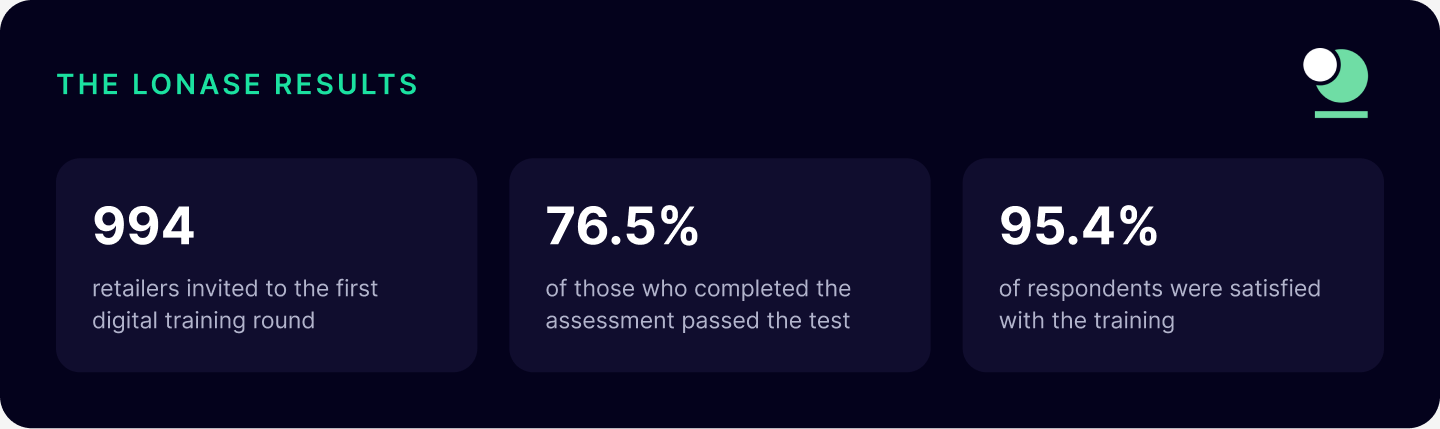
The whole programme took around two months from development to deployment, and LONASE is now building towards Level 3 with a blended approach that combines digital awareness with face-to-face sessions.

Three things to remember
- The logistics problem is already solved. Your sales team is in those stores every week, and training is minutes added to a visit that was happening anyway.
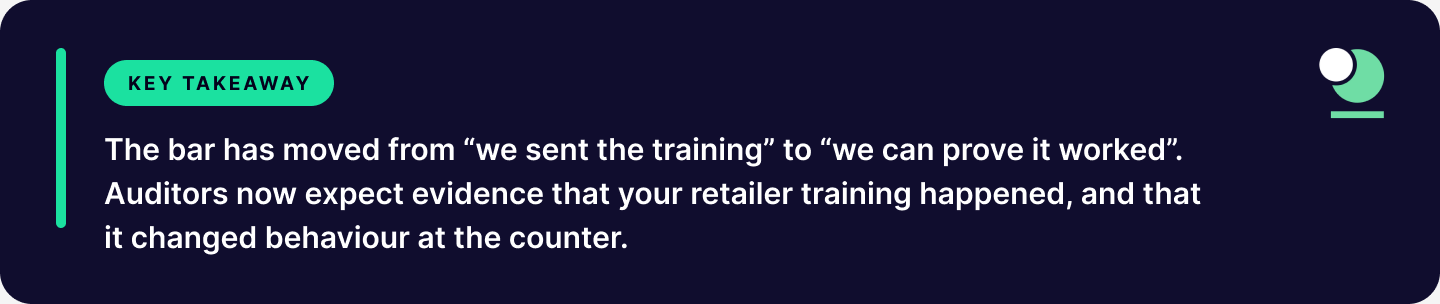
- The bar has moved from "we sent the training" to "we can prove it worked". The proof should build itself, as a byproduct of the process.
- Start today. The frameworks are converging on continuous improvement, and the lotteries that start now will have years of evidence and a visible improvement trend by the time it matters.
Ready to see it live?
digitalRG helps lotteries and suppliers train their retail networks and build the evidence their certifications ask for, whichever framework applies. Book a demo and we will walk you through it with your own network in mind.
Keep reading
All Responsible gaming posts
Lancez votre soumission WLA : ce que votre loterie doit savoir avant le 1er octobre
24 Jul 2026
Inicie su presentación ante la WLA: lo que su lotería debe saber antes del 1 de octubre
23 Jul 2026
Kickstart Your WLA Submission: What Your Lottery Needs to Know Before October 1st
23 Jul 2026